We Know WHAT Is Healthy. Why Is Change Still So Difficult?

From health advice to real life
We know that movement, good sleep and a healthy diet are good for us. Yet work, family, tiredness and long-standing habits often sit between a recommendation and everyday life. How can health fit into all of that?
Lifestyle medicine connects scientific knowledge about health with everyday life. Its six interconnected areas include a healthy, predominantly plant-based diet with an emphasis on minimally processed foods, physical activity, good sleep, stress management, social connection and avoidance of harmful substances. [1]
Today, both professionals and patients know a great deal about WHAT contributes to health. But knowing WHAT is not the same as knowing HOW to live that knowledge every day.
The question that has followed me through much of my professional life is: HOW?
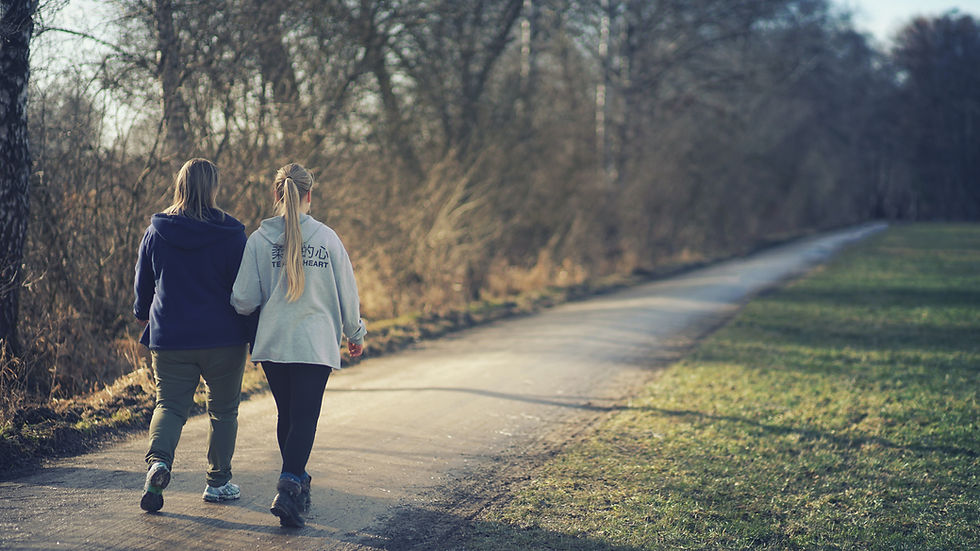
From advice to real life
Information, recommendations and professional advice matter, but on their own they are often not enough for lasting behaviour change.
After a consultation, counselling session or educational programme, a person returns to real life: family, work, relationships, responsibilities, daily routines, old habits and the surrounding environment. That is where we find out how well a recommendation can actually fit into everyday life.
Someone may know they should sleep more, but their work and family routine makes that difficult. They may understand the importance of physical activity but struggle to find a form of movement that fits into daily life. They may receive good nutrition advice and then return to a household where food is bought, prepared and eaten according to completely different habits.
The problem is therefore not always a lack of knowledge. Between what we know supports health and what we manage to sustain in real life lies the space where change either takes hold or old patterns return.
Habits live within a system
Lifestyle change does not happen in a vacuum. No one lives in isolation.
Behaviour is shaped by more than knowledge, motivation and willpower. Food choices are influenced by family habits, food availability and work schedules. Sleep is affected by work, family responsibilities and stress. Physical activity depends on time, space and the people around us. Stress management is influenced by relationships, daily demands and the resources available to us.

That is why a person cannot be considered separately from the system in which they live. This does not remove personal responsibility. It means understanding what supports change, what makes it harder and avoiding the temptation to reduce real barriers to a “lack of willpower”.
One framework for understanding behaviour is the COM-B model, which considers a person's capability, the opportunities provided by the environment and motivation. It helps us look not only at what someone knows and wants, but also at what they are able to do and what their circumstances make easier or harder.[2]
Perhaps we do not need even more advice
A physician knows medicine, a nutritionist understands nutrition and a kinesiologist understands movement. Physiotherapists, psychologists and pharmacists bring other areas of expertise. Each has a role, and professional knowledge remains the foundation.
But working with a real person quickly shows that knowing what to recommend is not always enough to make that recommendation workable. So alongside the question “WHAT is the evidence-based recommendation for this person?” it becomes important to ask: “HOW can we help them apply it in their own life?”
This changes the conversation with the professional as well. Listening, asking questions, agreeing realistic goals together, recognising barriers and following what happens when the person tries to change all become important.
Change is not done to a person. It is worked on with them. NICE guidance also supports approaches that include agreed goals, planning, follow-up and appropriate social support. [3] |
Small steps can still matter
When we talk about health, it is easy to set large goals: I will move more, eat better, sleep better and reduce stress. Everyday life rarely changes through one large decision.
Sometimes a sustainable change starts with a different agreement at home. Ten minutes of movement that someone can genuinely repeat. A change in the morning or evening routine. Recognising a situation that triggers an old behaviour. Involving a person who can provide support.
For a person who is mostly inactive, a ten-minute walk may be one possible starting point, depending on health status and individual circumstances. This is an example, not a universal prescription or a substitute for recommended overall physical activity. The World Health Organization emphasises that some physical activity is better than none.[4]
In the study by Lally and colleagues, participants repeated a chosen behaviour in the same everyday context. The development of automaticity varied between individuals, and missing one opportunity to repeat the behaviour did not substantially disrupt the process in that study. These findings do not establish a universal timetable for habit formation.[5]
Then we observe : What happened? What worked? What did not? What can we change? Change then becomes a process of learning and adjustment, rather than a test of discipline.

What might work in your life?
The following questions can be a starting point for personal reflection or a conversation with a professional. They do not provide a predetermined plan. Instead, they create space to consider what matters to you and what is realistically possible:
What would you like to change, and why does it matter to you?
What in your everyday life supports that change, and what makes it harder?
What small step would be genuinely manageable for you now?
Who or what around you could make that step easier?
If you have tried to change something before, what did the experience show you? What worked, and what did not?
Based on that experience, what would you do differently next time?
The aim is not to find a perfect plan, but to use attempts, experience and adjustment to find a way of changing that can actually live within your real life. |
From knowledge to change
For scientific knowledge to become part of everyday life, a recommendation needs to be considered alongside a person's relationships, patterns, resources, limitations and environment.
That is why I believe knowing WHAT supports health should be accompanied by knowing HOW to support a person through change. The goal is not to give more and more advice, but to help people apply what we know about health in everyday life.
The question is therefore not only what supports health, but how that knowledge can become a sustainable part of everyday life.
This article is educational and does not replace individual health assessment or treatment. Adapt any changes to your health status, and do not alter prescribed treatment without discussing it with your physician.
References and sources
American College of Lifestyle Medicine. What is lifestyle medicine? Overview of the field and the six pillars of lifestyle medicine.
Michie S, van Stralen MM, West R. The behaviour change wheel: A new method for characterising and designing behaviour change interventions. Implementation Science. 2011;6:42. doi:10.1186/1748-5908-6-42.
National Institute for Health and Care Excellence. Behaviour change: individual approaches. PH49. 2014. Recommendations 7-10.
World Health Organization. Physical activity. Fact sheet, 26 June 2024.
Lally P, van Jaarsveld CHM, Potts HWW, Wardle J. How are habits formed: Modelling habit formation in the real world. European Journal of Social Psychology. 2010;40(6):998-1009. doi:10.1002/ejsp.674.
About the author
Jelica Popić, MD, is a physician and psychotherapist and founder of Učilište Lovran - Medical & Wellness Academy. Her professional work includes health promotion, medical wellness and adult education, with an interest in systemic approaches and communication in support of behaviour change.
Edited for publication and supplemented with sources by Maks Luka Šenjug, MD. This article is not promotional; the link to the institution is included as part of the author's biography.